


Venues:
Weymouth and Portland
Dates: Saturday 28 July – Saturday 11 August
Gold medals: 11
Athletes: 400
Sailing: Then and now
Sailing, previously known as Yachting, developed as a sport from an ancient means of transport over water.It is thought to have begun in the Netherlands, with the word ‘yacht’ based on the Dutch word ‘jaght’, meaning ‘light shipping or naval craft’.
The sport was brought to England by King Charles II, who discovered it during his exile in the Netherlands in the mid-16th century.
International competition started in 1851 when an American crew sailed across the Atlantic to take part in a race around the Isle of Wight.
The event was re-named the America’s Cup, which remains the most prestigious competition in Sailing today.
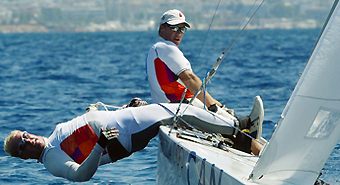
The sport of Sailing at the Olympic Games now includes windsurfing and yachts of all sizes and shapes.
How to play – and win
In Olympic Sailing, competitors use strength and skill to guide their craft around a course, with the aim of crossing the finish line first.This involves moving the sail to get maximum power from wind. Olympic class Sailing craft vary greatly in size, from 3.35m to 8.2m.
There will be 10 different classes in 2012, with races for men, women and open crews. Each event consists of a series of races.
Currently competitors score points for their position in every race, with the winner getting one point, second getting two and so on. At the end of the competition, the individual or crew with the fewest points is declared the winner.
Sailing in the Games
Sailing entered the Olympic programme in Paris 1900 as an event for both men and women. The sport was left out of the St Louis 1904 Games because of problems transporting boats and equipment from Europe to inland America.It returned at London 1908, and has been part of every Games since. The number and type of Sailing events has changed many times over the years, with different boats popular at different times. Windsurfing was introduced as a Sailing event at Los Angeles in 1984.
Facts about Sailing
- The sport’s name was changed from ‘Yachting’ to ‘Sailing’ at the Sydney 2000 Games.
- Women have always been allowed to take part in Olympic Games Sailing competition, but events for women only were introduced at Los Angeles 1984.
- Great Britain was the most successful Sailing nation at Athens 2004, with a total of five medals, including two golds.
- The first woman to win an Olympic Sailing medal was Frances Rivett-Carna of Great Britain, who won gold in London 1908.
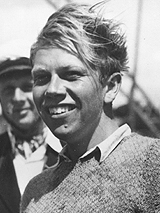
- Crown Prince Olav of Norway won Gold in the Six-metre Sailing class at the Amsterdam 1928 Games.
- Boats are identified on the water by a national country code on the sails.
Jargon buster
- Craft: A Sail Boat or board.
- Class: the actual model of craft, for example, the ‘Laser’ is a singlehanded,1 person craft.
- Fleet racing: A style of race where all the competitors sail against each other at the same time.
- Port: The left side of a boat when looking forward.
- Tack: To change direction relative to wind. Where the front of the boat passes through the ‘eye’ of the wind to change direction.
Get involved
More than 2.5 million people around the world regularly take part in Sailing. If you’re keen to join them, get in touch Royal Yachting Association (The RYA), which accredits centres for beginners all over the country as well as overseas (see 'related websites'.)Are you interested in...
Paralympic Sailing
Related websites
- Includes details of sailing, clubs, training centres and open days in your area
- Official website of the International Governing Body
- Active placesCan help you find a sailing club in your area (England only)
Related content
- Paralympic Sailing
News
- Construction sets sail on London 2012 venue2 May 2008
- Construction contract awarded for Sailing venue7 January 2008
- Plans approved for Sailing venue
Blog
- Welcoming Seb to a potential Sailing Pre-Games Training Camp facilityPosted by Bob, Pwllheli Sailing Club Events Committee Chairman on 16 May 2008
- Building relationships with transport operatorsPosted by Allan Edmonson on 12 May 2008
- Testing the waters at Weymouth and PortlandPosted by Stuart Buss on 6 May 2008
- Contact us
- Web accessibility statement
- Jobs
- Privacy policy
- Terms of use
- About this site
- Freedom of information
- Copyright

The official site of the London 2012 Olympic and Paralympic Games